

Imagine riding a bike with training wheels forever — you pedal, you move, but you never really learn balance. That’s often what happens when balance training never progresses.
The Balance Bridge Metaphor
Think of functional ability as a bridge between independence and dependency. In our youth, that bridge is strong: muscles, coordination, senses, everything works in sync. But if we don’t keep up with regular balance “maintenance,” parts of that bridge—muscle strength, proprioception, stability—start to weaken. Over time, small deficits add up: tripping, wobbling, fear of falling, less confidence.
In this post you’ll learn why balance declines with age (or inactivity), how physical therapy can help reverse or slow that decline, what role tools like a safety overhead support system play, and practical tips you or a loved one can begin today.
Why Balance Fades Over Time (and What Loss Looks Like) Metaphor
As we age, several systems that contribute to balance — strength, joint flexibility, proprioception (awareness of body position), vision, vestibular (inner ear) — gradually decline. Add in sedentary lifestyle or injury, and the decline accelerates. This loss may initially show up as slower walking, unsteadiness turning corners, or needing support when going up/down stairs.
What if your body’s internal GPS starts losing satellites?
A controlled study (“Stay Balanced” program) found that older adults (75-91 yrs) doing progressive balance training twice a week for 10 weeks had significant improvements in balance, gait speed, leg strength, and reduced fear of falling, and many of those gains kept months after. PubMed
Another systematic review showed the most effective balance training was done three times per week over ~3 months. PMC
Tip: Start by assessing where you stand: try standing on one leg for 10 seconds; walk heel-to-toe in a straight line; note any wobbling or need to use hands. These mini-tests tell you what you need to work on.
The Foundation: What Balance Training Consists Of
You can’t build a house on sand — you need a solid foundation first.
Good balance training isn’t just “stand up and hope.” It’s a layered program targeting: strength (especially legs & core), sensory feedback (eyes, surface sense, vestibular input), flexibility of joints, dynamic control (movement, change of direction), and cognitive challenge (dual-tasking). Combining these gives far better results than isolated exercises. Physiopedia+1
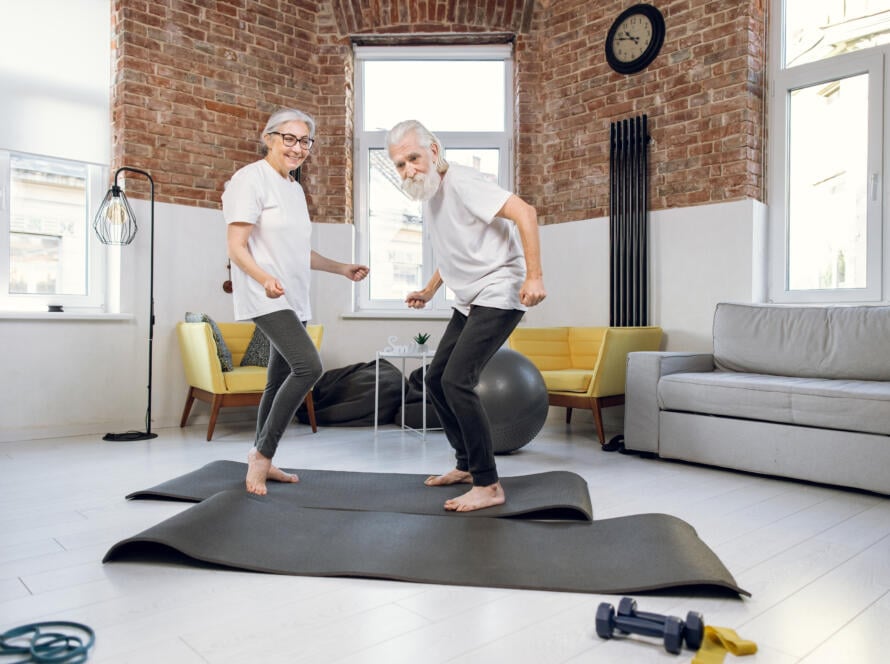
Tip: Even at home, you can start with seated leg strengthening; standing balance holds; shifting weight side-to-side; walking over slightly uneven (safe!) surfaces. Always go slowly and safely.
Introducing the Safety Overhead Support System: Why It Matters
What if you could remove the “training wheels” safely, knowing there’s invisible support ready?
One of the biggest barriers in balance training is safety. Therapists often use tools like gait belts or physical holding. These are great initially, but they can limit how far you push for true balance—because if support is always there, your body may rely on it.
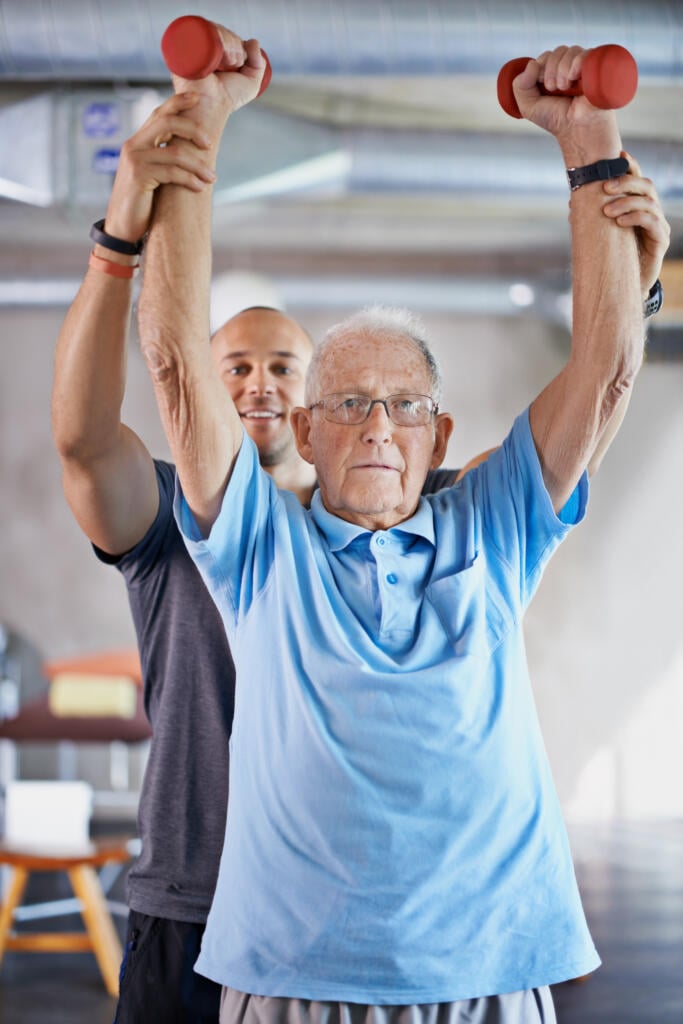
A safety overhead support system gives you the ability to challenge balance in a more authentic way, while still keeping risk low. It’s like learning to ride without training wheels but having a harness overhead just in case. With such a system, therapists can be more hands-off, letting patients truly test balance, recover from a loss of stability, and retrain neuromuscular pathways as they would in real life.
Tip: Ask your therapist if sessions with overhead support are part of your plan. When safe, try stepping, turning, or small perturbations under this support, to build real balance capacity.
Removing Dependency: From “Training Wheels” to True Balance
At some point, you want to take off the stabilizers.
If training always involves external support, the body doesn’t fully develop the automatic responses needed when you stumble, trip, or walk on a shifting surface. That’s why stepping down from supports (gait belts, supports, harness) is crucial — but must be done systematically, safely, and under supervision.
Balancing progression might look like: with support → partial removal of support (light touch) → no support but safety backup (overhead system) → functional challenges (stairs, uneven ground, distractions). This helps build confidence and real independence.
The Stay Balanced program showed that after intervention, not just balance metrics improved, but gait speed and leg strength too — meaning participants were more capable for daily tasks. PubMed
Tip: Gradually attempt tasks without leaning on walls or furniture. Use the overhead support system in therapy to try full weight-bearing, stepping, turning without belt or handholds when safe.
Preventing Falls & Keeping Functional Ability Longer
Every time you fall, you risk more than a bruise — you risk mobility, freedom, quality of life.
Falls are a major health risk for older adults. Reduced balance increases the risk of falls, which can lead to serious injury (hip fractures, head injuries), loss of independence, fear of moving, social isolation. But the good news: fall risk can be significantly reduced through balance retraining. Systematic reviews show that balance training programs can reduce fall rates substantially, especially when done regularly and progressively. (E.g., three times per week over months) PMC+1
Tip: Incorporate balance exercises into your regular routine — not just during therapy sessions. Even 10-15 minutes per day of balance drills (standing on one foot, walking heel-to-toe) helps maintain what you gain.
Real Results: What Clients Can Expect & How Long It Takes
What does progress look like, really?
Many people see noticeable improvement in balance, gait speed, strength, and confidence within 8-12 weeks of consistent, targeted training. With overhead safety support, those gains can be safer and more durable because therapy is more challenging (in the right way).
Therapists often measure progress with standard tools (Berg Balance Scale, Timed Up & Go, gait speed tests). Seeing improvement there often correlates with better performance in daily life: fewer tumbles, more stability climbing stairs, walking longer distances, less reliance on assistive support.
Tip: Track your progress. Ask your therapist to do a baseline test (e.g. one-leg stand, timed up & go). Retest every 4-8 weeks. Notice what feels easier: walking, stepping off curbs, balance when reaching, etc
Your Path Forward
Aging — or long periods of inactivity or injury — doesn’t have to mean losing your stability. Balance is something we can improve with the right mix of strength work, sensory retraining, and progressive challenges. Tools like safety overhead support systems allow us to take off the “training wheels” safely, letting patients fully retrain balance, restore independence, and reduce risk of falls.
If you or someone you care for wants more stability, more confidence, more freedom to move without fear — it’s never too late to start. With consistent effort, appropriate support, and skilled therapy, that bridge of functional ability stays strong.